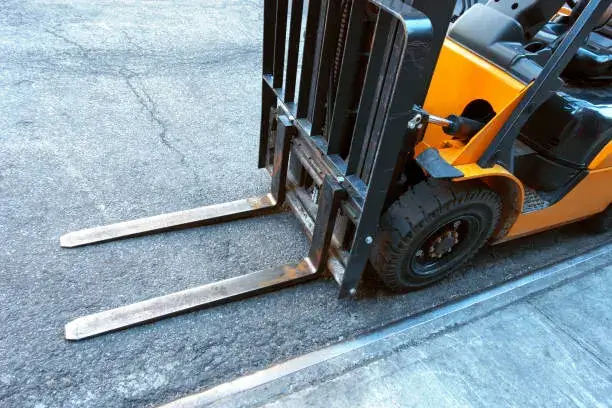
Forklifts are used across warehouses, construction projects, manufacturing facilities, distribution centers, retail operations, industrial properties, and other workplaces, but that doesn’t mean the same forklift is appropriate everywhere. A machine that performs well inside a warehouse with narrow aisles and smooth concrete may be a poor choice for an outdoor construction site with uneven terrain. Likewise, a large machine designed for demanding outdoor applications may be unnecessarily difficult to maneuver in a compact indoor facility.
Choosing the right forklift rental therefore starts with understanding the work rather than simply asking for a forklift. Before reserving equipment, consider where it will operate, what it needs to lift, how high materials need to go, how much room is available, and what type of surface the machine will travel across. If you’re preparing for an upcoming material-handling project, visit our Services page to explore forklift rental options and learn more about equipment available for different applications.
Start With the Work Environment
The first question should be simple: where will the forklift operate? Indoor warehouses, loading areas, construction sites, outdoor storage yards, and industrial facilities can present very different operating conditions. Floor surface, ventilation, doorway clearance, overhead obstructions, pedestrian traffic, ramps, grades, and aisle width can all influence equipment selection.
OSHA’s powered industrial truck guidance specifically notes that workplace conditions affect the hazards associated with forklift operation. OSHA identifies physical conditions, pedestrian traffic, ramps and grades, loading docks, narrow aisles, elevators, and enclosed or hazardous areas as factors that need to be considered when forklifts are used in the workplace.
That makes equipment selection a job-site decision rather than simply a question of lifting capacity.
When Does a Small Forklift Make Sense?
Bigger isn’t automatically better. There are many situations where a small forklift rental may be more practical than bringing a larger machine onto the property. Compact forklifts can be useful when maneuverability and available operating space are important considerations.
Warehouses with tighter layouts, smaller commercial facilities, loading areas, manufacturing environments, and other confined workplaces may benefit from equipment that can navigate available spaces more effectively. A smaller forklift can also be easier to position when workers need to move materials through doorways or around existing inventory and equipment.
However, compact dimensions shouldn’t be the only consideration. The forklift still needs sufficient rated capacity and lifting height for the intended load. Never select a smaller machine simply because it fits better if its specifications aren’t appropriate for the materials being handled.
Measure the Space Before Reserving Equipment
One of the easiest rental mistakes to avoid is discovering that the forklift doesn’t physically fit into the area where it needs to work. Before choosing a machine, measure important clearances around the job site, including doors, aisles, loading areas, ceilings, trailers, storage racks, and other confined spaces.
OSHA recommends understanding several critical forklift measurements, including overall lowered height, overall raised height, free fork height, and maximum fork height. These measurements help determine whether the machine can enter a particular space and safely lift materials without striking ceilings, sprinklers, racks, doorways, or other overhead objects.
If you’re considering a small forklift rental because your facility has limited space, provide those measurements when discussing the project. The more information available before delivery, the easier it becomes to determine what type of equipment may fit the application.
When Is a Stand-Up Forklift Useful?
A stand up forklift rental may be worth considering for certain warehouse and material-handling applications where operators frequently maneuver through aisles, retrieve or place loads, and perform repetitive material movement.
Stand-up forklifts differ from traditional sit-down models in operator position and configuration. Depending on the specific truck, they can be well suited to warehouse environments where maneuverability and efficient material handling are priorities.
However, the term “stand-up forklift” can describe equipment with different capabilities, so the actual application still matters. A business should know the required capacity, lifting height, aisle dimensions, load type, and operating environment before selecting a particular model.
Warehouse managers should also consider pedestrian activity. Forklifts frequently share working areas with employees on foot, which makes traffic planning, visibility, designated pathways, and operator awareness important parts of safe operation.
Warehouse Layout Should Influence Equipment Selection
A warehouse isn’t simply an empty building with shelves. Its layout determines how material-handling equipment can move through the space. Rack spacing, aisle width, turning areas, staging zones, loading docks, overhead fixtures, and pedestrian routes all affect forklift operation.
Before arranging a stand up forklift rental, evaluate the routes the machine will use throughout the facility. Don’t measure only the storage aisle and forget about the doorway, loading dock, or turn required to reach it.
OSHA emphasizes that operators need to understand whether their forklift can safely complete the assigned task within the available space. Knowing clearances before work begins can help reduce the risk of striking racks, ceilings, trailers, or overhead fixtures.
When Does a Telehandler Become the Better Option?
A telehandler forklift rental serves a different type of need. Telehandlers use a telescoping boom that can provide reach beyond what is available from many conventional vertical-mast forklifts. They are commonly associated with construction, outdoor material handling, and applications where materials need to be positioned at greater heights or distances.
For example, a construction project may need to move materials from ground level to an elevated work area. The combination of lifting height and forward reach can make a telehandler appropriate for certain tasks where a standard warehouse forklift isn’t designed to operate.
That doesn’t mean a telehandler is simply a “better forklift.” It’s a different type of machine suited to different applications. Using more equipment than the job requires can create unnecessary cost and maneuverability challenges, while using too little equipment can leave the machine unable to complete the task safely.
Outdoor Conditions Require Additional Planning
Outdoor projects introduce considerations that may not exist inside a warehouse. Ground conditions can change throughout the job site, especially after heavy rain or ongoing construction activity. Loose soil, gravel, slopes, uneven areas, holes, and other conditions can affect stability and operation.
OSHA’s guidance for all-terrain powered industrial trucks emphasizes that operating surfaces need to be strong enough to support the forklift, its load, and the operator. Surfaces should also be evaluated for holes, grease, oil, and obstructions that could cause a machine to skid, bounce, or potentially tip.
When requesting a telehandler forklift rental, describe the actual terrain instead of simply saying the project is outdoors. A paved commercial yard and an unfinished construction site can require very different equipment considerations.
Know the Load Before Choosing the Forklift
The forklift needs to match what you’re actually lifting. Before arranging a rental, know the approximate weight of the load, its dimensions, how it is packaged, where its center of gravity may be, and how high or far it needs to be moved.
Never assume that a forklift can safely handle a load simply because the forks fit beneath it. Rated capacity matters, and attachments or unusual load configurations can affect safe operating capacity.
If your project involves different types of materials, discuss the heaviest and most challenging loads with the rental provider. Selecting equipment around the easiest pallet while ignoring the heaviest material on the project can create problems once work begins.
Indoor and Outdoor Power Needs May Differ
Power source is another consideration when comparing forklift options. Electric and internal-combustion forklifts have different operating characteristics, and the environment where the machine will be used should be considered when choosing between them.
Enclosed areas require particular attention. OSHA notes that only designated types of powered industrial trucks can be used in certain hazardous locations and discusses indoor-air-quality and carbon-monoxide concerns associated with some equipment.
If the forklift will be used indoors, tell the rental provider about ventilation and operating conditions rather than assuming any machine will be suitable.
Operator Training Is Required
Renting the correct forklift doesn’t eliminate the employer’s responsibility for safe operation. OSHA requires employers to ensure that powered industrial truck operators are competent to operate the equipment safely through the required training and evaluation.
OSHA’s official Powered Industrial Trucks – Forklifts resource explains operator-training requirements, common hazards, workplace considerations, loading and unloading, inspections, and safe operating practices. This makes it a useful resource for employers planning to use rental forklifts on their projects.
A rental machine should only be operated by appropriately trained and authorized personnel.
Inspect the Forklift Before Each Shift
Equipment should also be inspected before operation. OSHA’s pre-operation guidance includes checking items such as tires, forks, hydraulic components, visible leaks or damage, safety devices, warning labels, and other equipment-specific components.
If a forklift is found to be defective or unsafe, OSHA states that it should be removed from service rather than continuing to operate until the problem becomes more serious.
This applies whether the forklift is owned or rented. Rental equipment still needs to be incorporated into the employer’s normal inspection and workplace-safety procedures.
Match the Rental to the Job Instead of the Other Way Around
The best rental decision usually comes from describing the job first and selecting the machine second. Explain whether the project is indoors or outdoors, the surface conditions, available aisle and doorway clearance, load weight, required lifting height, forward-reach needs, and how long the equipment will be required.
A small forklift rental may be appropriate when compact maneuverability is important. A stand up forklift rental may fit certain warehouse and repetitive material-handling applications, while a telehandler forklift rental may make more sense when a project requires additional reach or involves appropriate outdoor construction conditions.
To learn more about Forklift Rental and available equipment options, visit our About Us page. You can also visit our Service Areas page to explore rental availability and determine whether equipment can be delivered to your project location.
Choose the Forklift Around the Work You Need to Complete
Forklift selection becomes much easier when you stop looking for one machine that can supposedly do everything. Start with the work environment, measure available space, understand the load, determine the required lifting height and reach, evaluate surface conditions, and consider whether the equipment will operate indoors or outdoors.
The right machine should fit the job site as well as the material-handling task. A compact forklift can be valuable in tight areas, stand-up equipment can support certain warehouse operations, and telehandlers can provide capabilities suited to demanding outdoor and construction applications. The important part is matching those capabilities to what your project actually requires.
Contact Forklift Rental today to discuss your upcoming project and reserve equipment suited to your work environment. Whether you need a small forklift rental for a compact facility, a stand up forklift rental for warehouse material handling, or a telehandler forklift rental for a project requiring additional reach, our team can help you explore rental options and get the equipment you need to keep the job moving.